Private coastal property
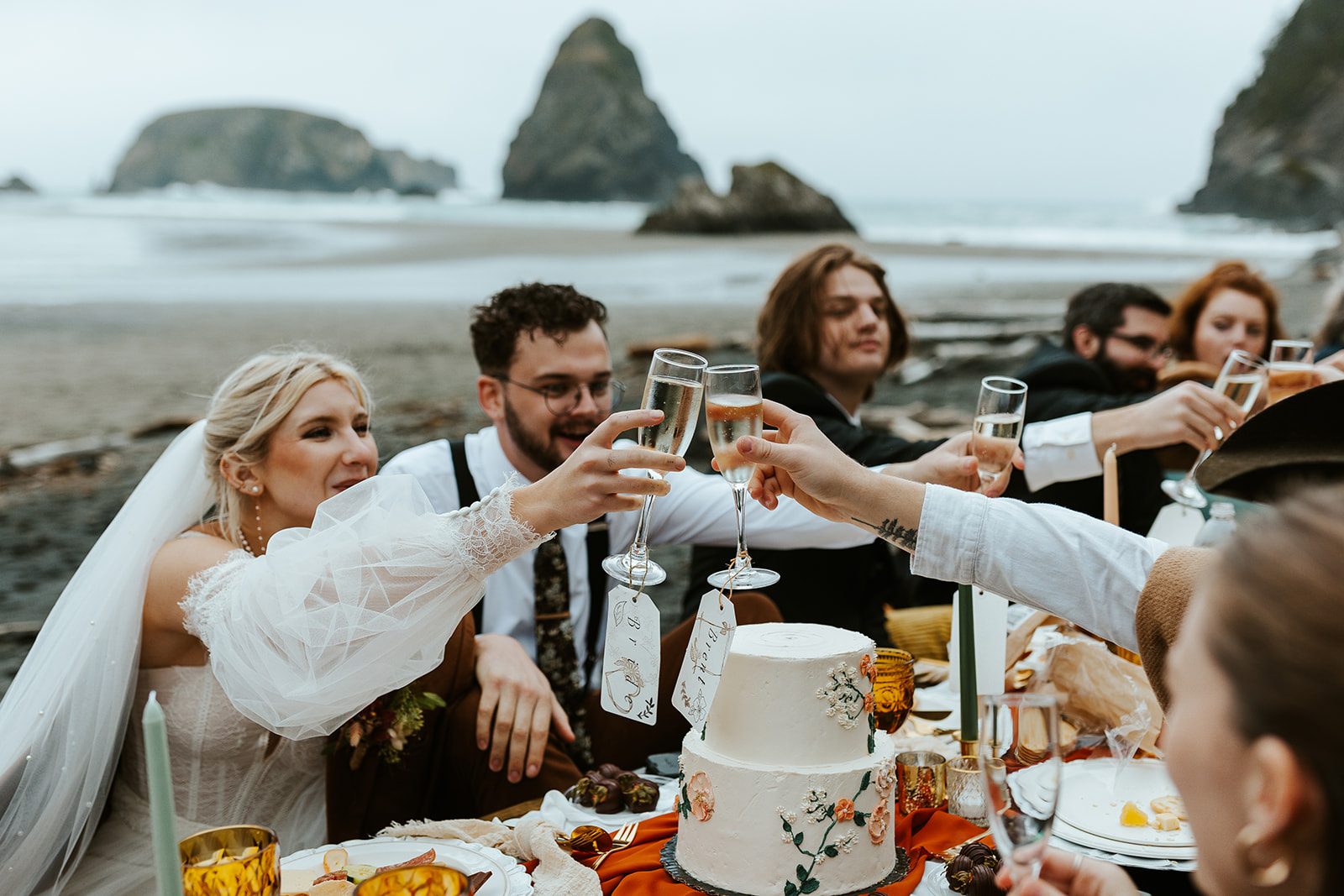
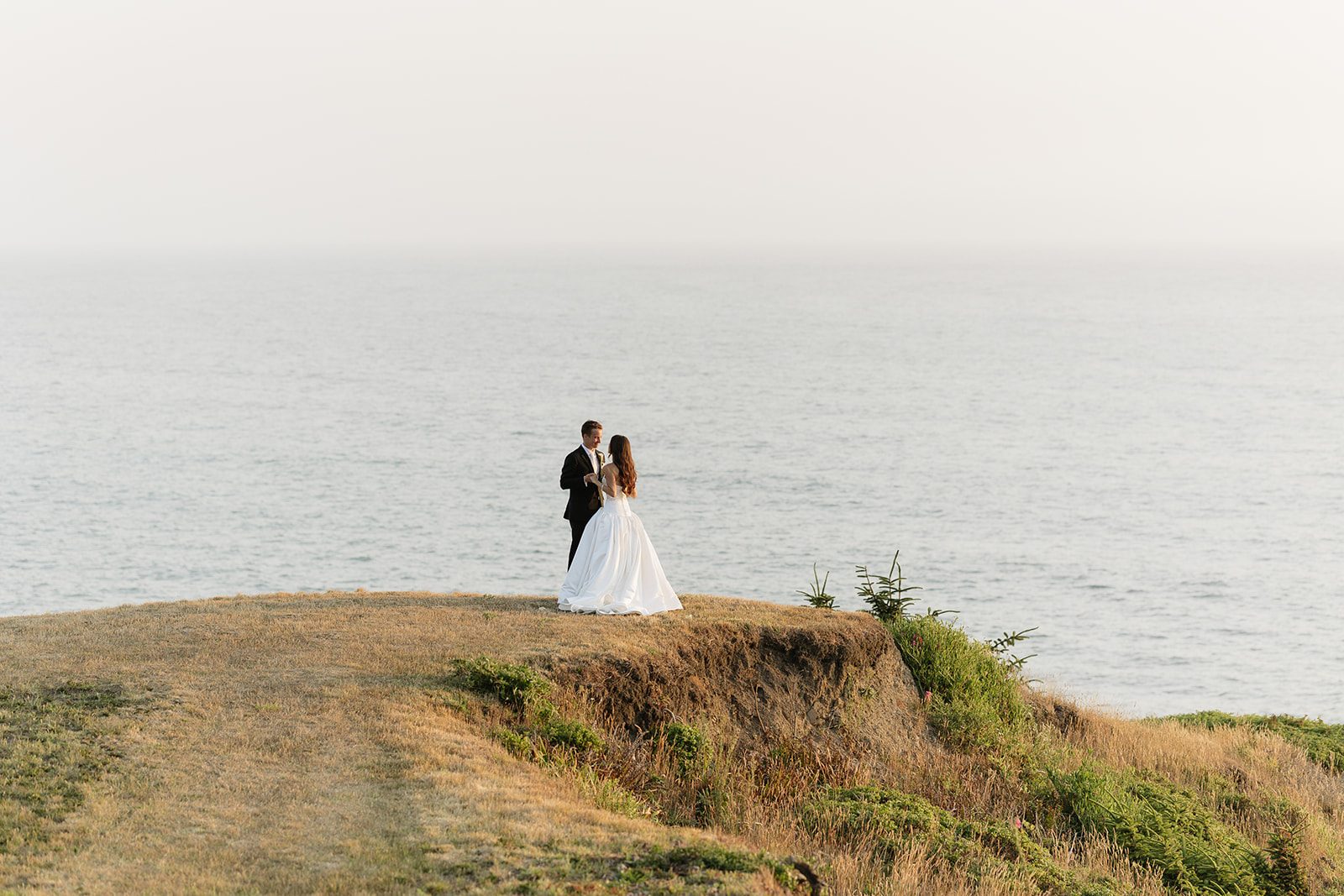
The whole-weekend option. Crook Point in Pistol River is 3,000 acres of private coastline with lodging on site — elopements to 300 guests, and the coastal venue we plan at most.
Read the guidePlanning guide · Southern Oregon & northern California coast
Sea stacks, old-growth redwoods, and the warmest weather on the Oregon coast — for a fraction of what the same day costs in Big Sur or Cannon Beach. Here's everything it takes to plan it from anywhere.
Most people picturing a West Coast beach wedding think of Big Sur, Malibu, or Cannon Beach — the three places where that picture costs the most. The stretch we work, from Bandon down through Gold Beach and Brookings and across the line into Del Norte County, has the same Pacific and better odds: bigger sea stacks, emptier sand, redwoods twenty minutes inland, and towns small enough that you can rent most of one for a weekend.
It is also, quietly, the warmest part of the Oregon coast. Everything south of Port Orford sits in what locals call the banana belt. Warm inland air funnels down the Chetco River canyon and Brookings can run dramatically warmer than the coast an hour north on the same afternoon. That's the difference between guests enjoying an outdoor dinner and guests wearing your spare blankets.
The trade is access. Nobody stumbles onto this coast — you drive to it. The couples who get married here are the ones who wanted somewhere that still feels unfound, and they're routinely surprised at what a whole wedding weekend costs compared to the version of it two states south.
You live somewhere else. You've seen a photo of an arch made of sea stacks or a chapel in the trees, and you have no idea what's involved in actually standing there in a dress. That's the normal starting point, and it's most of our coastal clients — we plan the whole thing remotely, walk the sites for you, and you arrive to a wedding instead of a punch list.
Everything below is the practical stuff: how people get here, where you can legally say vows, which paperwork belongs to which state, and when the weather cooperates.
There is no big airport on this coast, and pretending otherwise is how guest lists fall apart. Four realistic options, and the drive is part of the decision:
Tell guests the drive on the invitation. Not the website, not a group text the week before — on the paper, in the first sentence. Half the friction in a destination wedding is people discovering the last three hours at baggage claim.
Everyone will need a car, or you'll need to arrange transport. Rentals at the smaller airports run out; say so early. If you're bringing a group, a shuttle for the ceremony hour is money well spent, because parking at the prettiest spots on this coast is usually a gravel pullout.
Book lodging before you book anything else. Brookings-Harbor, Gold Beach, and Bandon have hotels and a deep supply of vacation rentals, but summer weekends go early, and a wedding block is a different conversation than one room. Some properties solve this entirely — Crook Point has eight oceanfront homes on the ranch itself, so your family sleeps five minutes from the ceremony.
Give yourselves a buffer day. Fog, a late flight, a slow drive down 101 — the couples who arrive two days early are the ones who are relaxed on the morning of.
The site you pick decides your paperwork, your guest cap, and your timeline — so pick it before you fall for a photo of somewhere else.
The whole-weekend option. Crook Point in Pistol River is 3,000 acres of private coastline with lodging on site — elopements to 300 guests, and the coastal venue we plan at most.
Read the guide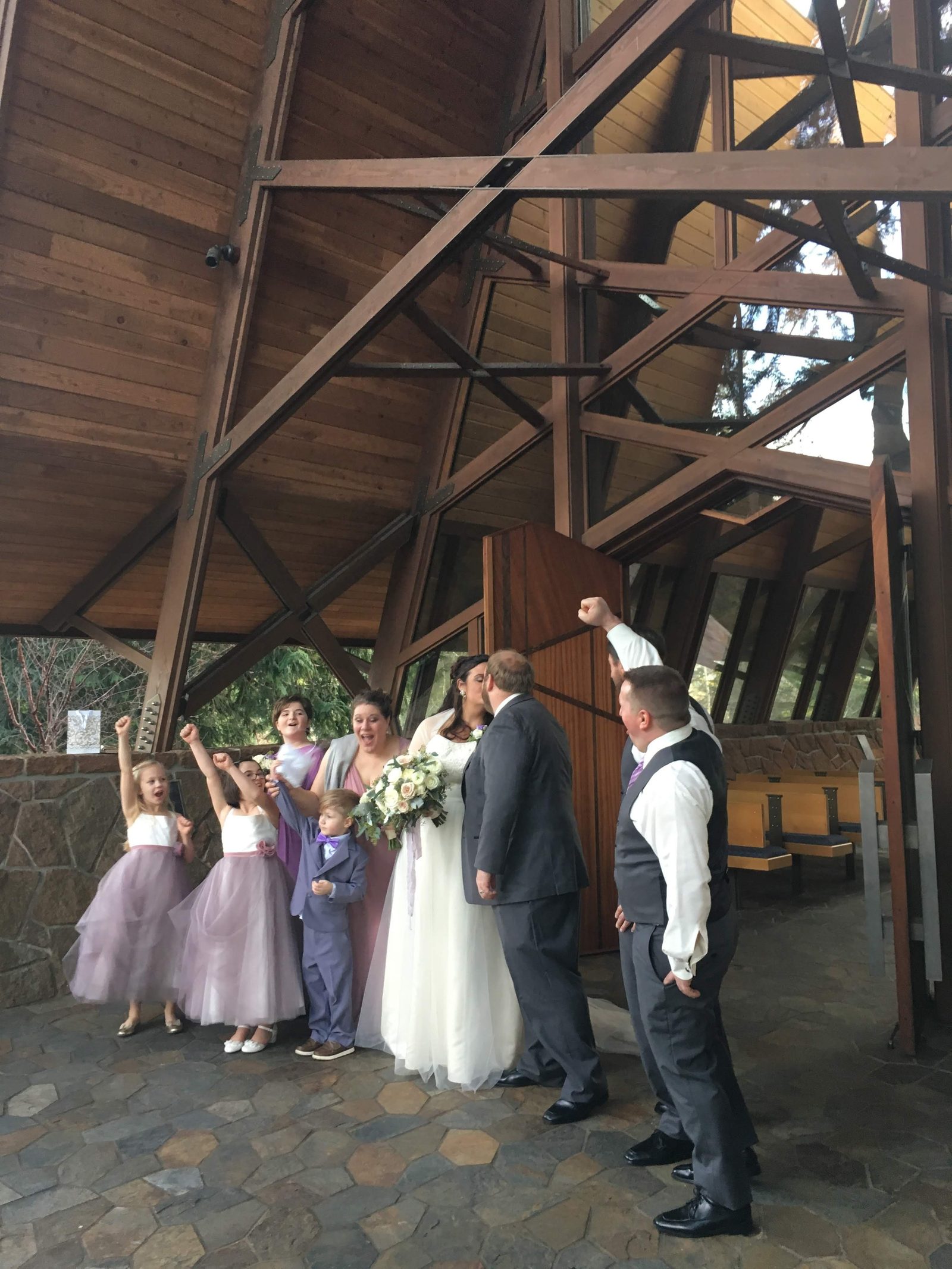
Capella by the Sea in Brookings seats forty-nine, rents by the hour from the city, and is one of the most affordable ceremony sites on this coast. Bring your own reception.
Read the guide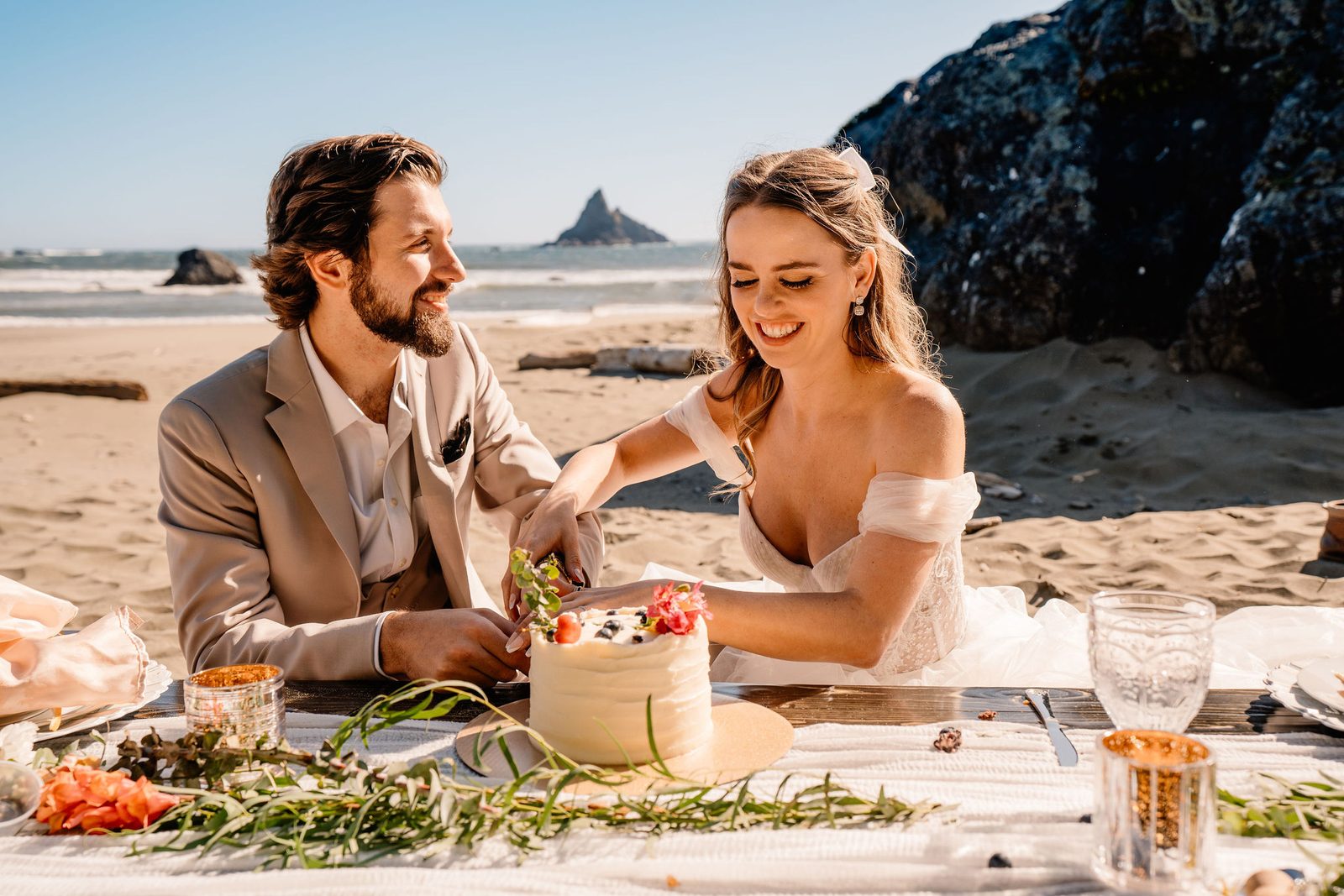
Oregon's ocean shore is public from the water to the vegetation line. Small ceremonies and picnic setups are fine as-is; fifty-plus guests, a seated ceremony, or event tents move you into state-park permit territory.
How elopements workTwenty minutes into California you're among the tallest trees on earth. Jedediah Smith and Del Norte Coast are stunning and permit-governed — apply months out, and use a California marriage license.
Talk it through with usThe paperwork here is light. Pick up your license from the state you'll say your vows in — Oregon for Brookings and the beaches, California for Crescent City and the redwoods — and have someone you love sign it as your officiant. Neither state requires a professionally licensed officiant; a friend with a free online ordination is exactly as official as anyone else, and that's how most of our couples do it.
Both of you apply together at any county clerk's office with photo ID — Curry County covers Brookings and Gold Beach. There are no blood tests and no residency requirement, so out-of-state couples are welcome. Then two numbers matter: a three-day waiting period before the license can be used, and sixty days of validity after that. The license works anywhere in Oregon, not just the county that issued it.
Flying in close to the date? The clerk can waive the three-day wait for a small fee, so it's an errand, not a crisis.
For a ceremony in Crescent City or the redwoods, the closest issuing office is the Del Norte County Clerk-Recorder in Crescent City. No waiting period, and the license is good for ninety days. It's a small office, so check their hours and whether they want an appointment — we'll make the call with you if you'd rather.
Oregon beaches. The ocean shore is public, and a small ceremony or a picnic setup — a table, chairs around it, a handful of guests — is treated like anyone else bringing gear to the beach. We've never needed a permit for one. Oregon Parks and Recreation asks for a special use permit at fifty or more people, or for a seated ceremony with rows of chairs, event tents, a stage, or anything that restricts public access. If that's your wedding, start the application early — they want lead time measured in months.
California redwoods. Ceremonies in Jedediah Smith, Del Norte Coast, or Prairie Creek Redwoods require a special use permit through California State Parks — for every wedding, including a two-person elopement. There's an application window (roughly six months out to about a month before), a non-refundable application fee, and a list of pre-approved ceremony sites, with room to request one that isn't on it.
City and county property. Rented facilities like Capella by the Sea come with their own rules on insurance, music, decorations, and hours. Get them in writing before anyone designs anything.
We handle these applications for our couples, which mostly means starting them early enough that "handled" is even possible.
Late spring through early October is the reliable window, and the far south coast stretches it at both ends. September is our quiet favorite — warm, clear, and the summer crowds have gone home.
Fog is not a problem. It is the single thing out-of-state couples worry about most and the one we worry about least. Coastal fog photographs beautifully, it softens midday light that would otherwise be harsh, and it usually lifts on its own schedule. Build a timeline with some give in it and let the weather be part of the day.
Wind is the real variable. Afternoon breeze on an exposed bluff will find your veil, your napkins, and your florals. It's the reason we walk sites for shelter before we set a ceremony time, and the reason we prefer weighted arrangements and structured hair to anything that requires the air to hold still.
Rain has a season. December through February is the genuinely wet stretch. Winter weddings here are gorgeous and completely doable — with an indoor ceremony option that you'd actually be happy using, not a tent you hope not to need.
Time the ceremony to the light, then check the tide. Golden hour on this coast is worth planning the whole day around. If you want a ceremony or portraits on the sand, the tide table decides where that beach actually is — a spot that's wide and perfect at 5 p.m. can be gone at 7.
Book earlier than you think. This coast has a small, excellent, and finite vendor pool. Photographers, caterers, and florists who work Curry County weddings take a limited number of weekends, and summer Saturdays are claimed twelve to eighteen months out. Lodging goes at the same pace.
We take one wedding per weekend, on purpose — so a coastal date gets all of our attention, from Friday's setup through Sunday's clear-out.
We're not going to put numbers on this page — our current pricing lives on the weddings and elopements pages, and every venue and vendor sets their own. What's worth understanding is the shape of the budget, because it's different from a city wedding in three ways.
The ceremony site can be nearly free, or it can be the whole thing. A public beach costs nothing for a small ceremony. A city chapel costs an hourly rental. A private coastal ranch is a real venue fee that also solves your lodging, your rain plan, and your parking. All three produce beautiful weddings — they just move the money to different places.
Travel is a line item, for you and for us. Your guests are flying and driving; you may be renting houses. Vendors coming from the Rogue Valley carry a travel fee that covers fuel and lodging — ours is modest and listed with our coastal pricing. A local-only vendor team is sometimes cheaper and sometimes simply unavailable on your date; we'll tell you honestly which.
Small doesn't mean cheap, but it does mean controllable. Cutting a guest list from a hundred and twenty to forty cuts catering, rentals, florals, and the size of everything at once. That's why the all-inclusive micro wedding format works so well on this coast — one predictable price, an actual photographer, and a day that doesn't feel scaled down.
Where couples over-spend: duplicating a rain plan they'd never use, renting furniture the venue already includes, and paying for a second day of setup that better sequencing would have avoided.
Where couples under-spend: photography, and someone to run the day. On a coast where the light is the reason you came and the logistics are the reason it's hard, those are the two things you'll wish you'd funded. Day-of coordination exists precisely so nobody in your family is directing traffic in a gravel pullout in their good clothes.
Usually not. Oregon's ocean shore is public, and a small ceremony or picnic setup — a table with chairs around it and a handful of guests — is treated like anyone else's beach gear. We've never needed a permit for one. Oregon Parks and Recreation asks for a special use permit at fifty or more people, or for a seated ceremony with rows of chairs, event tents, or a stage. If that's your plan, we handle the application — it wants months of lead time.
Anyone you'd like — neither Oregon nor California requires a professionally licensed officiant, so a friend with a free online ordination is as official as it gets. Pick up the license from the state you'll say your vows in: Curry County in Gold Beach for Brookings and the beaches, Del Norte County in Crescent City for the redwoods. Either is a quick errand.
Both of you apply together at a county clerk's office with photo ID — Curry County serves Brookings and Gold Beach. There's a three-day waiting period before the license can be used — waivable at the counter for a small fee — and it stays valid for sixty days. No blood test, no residency requirement.
Medford (MFR) for the best flight schedule, about three hours from Brookings and Gold Beach. Crescent City (CEC) is closest to Brookings — roughly half an hour — with limited service. North Bend (OTH) is about two hours north of Gold Beach. Eugene and the Bay Area are bigger and four-plus hours away, and sometimes much cheaper.
Late spring through early October. September is our quiet favorite — warm, clear, and past the summer crowds. The far south coast around Brookings is Oregon's banana belt and runs warmer than the rest of the coast year-round, which stretches the season at both ends.
You get beautiful photographs. Fog is the thing out-of-state couples worry about most and the thing we worry about least — it softens the light and usually lifts on its own schedule. Wind and winter rain are the variables worth planning around.
Yes — that's most of our coastal couples. We walk the sites, vet and book the vendors, handle permits and timelines, and keep you to a handful of real decisions. You arrive to a wedding instead of a to-do list.
Twelve to eighteen months for a summer Saturday. The vendor pool on this coast is small and excellent, lodging books at the same pace, and we take one wedding per weekend. Off-season and weekday dates open up considerably.
Usually, and often by a lot — the same Pacific, smaller towns, and ceremony sites that range from a public beach permit to a private ranch. Our current pricing is on the weddings and elopements pages; what changes most is the venue and how many people you're feeding.
Tell us the date you have in mind. We'll tell you honestly what it would take — and what it would look like.